• Request Info
  • Visit
  • Apply
  • Give
  • Request Info
  • Visit
  • Apply
  • Give

Search

A-Z Index Map

Ecology & Evolutionary Biology

  • About
    • Give to EEB
    • Alumni
  • People
    • Faculty
    • Emeritus
    • Graduate Students
    • Adjunct
    • Postdocs
    • Research Staff
    • Administrative Staff
  • Undergraduate Students
    • EEB Concentration in Biology
    • EEB Minor
    • Honors
    • Course Descriptions
    • Naturalists Club
    • Fellowships
    • Be successful in EEB
  • Graduate Students
    • Graduate Student Handbook
    • FAQs
    • Applying to Grad School
    • GREBE
    • Funding
  • Research and Outreach
    • Research Highlights
    • Undergraduate Research Opportunities
    • Outreach Events
  • Collections and Facilities
    • UT Herbarium
    • UT Etnier Ichthyology Collection
    • Hesler Biology Greenhouses
    • Natural History Collections Course
    • Fellowships and Awards
    • Biology Field Station
  • News & Seminars
    • Current Seminars
    • News
    • Newsletter
Home » Archives for Kaitlin Coyle
Author: Kaitlin Coyle
Bees pollinate and crowd around inside a honeycomb.

Bees of many species contain tiny magnetic particles – suggesting they may have an innate magnetic compass for navigation

July 27, 2026 by Kaitlin Coyle

Laura Russo, University of Tennessee

A surprisingly large number and diversity of bee species – 74 out of 96 tested – have magnetic properties, according to research my colleagues and I recently published in the journal Science Advances.

Some animals are able to use iron-based magnetic compounds such as magnetite to detect and navigate via the Earth’s magnetic field – a sense called magnetoreception. We considered magnetism in the insects we tested to be a proxy for which species might be magnetoreceptive.

For decades, biologists have known that social, cavity-nesting honeybees exhibit magnetoreception. Most researchers assumed that this internal compass was tied to living in a colony; honeybees communicate the location of floral resources to other colony members through a dance that indicates direction relative to the position of the Sun and the geomagnetic field.

Our study had two goals: to compare magnetism between bee species that live in groups versus on their own, and to track down the evolutionary origin of magnetoreception in bees.

Finding magnetism wherever we looked

To test magnetic responses, we collected bee specimens from across the bee family Apidae, which includes social species such as honeybees along with solitary species such as chimney bees. We ground dried dead bees into a powder, then measured how magnetic this powder was in a magnetometer.

To our surprise, we found that the magnetic response was strong in both bees that live in groups and those that live alone. This result forced us to reject our initial hypothesis that magnetism was necessary only for social bee species.

Even more unexpected, a bee from a small social species in the family Halictidae was also strongly magnetic. We then broadened our search to include bees from across the bee evolutionary tree, suspecting that the evolutionary origin of magnetism could be found in older bee lineages.

We identified some trends regarding the strength of the magnetic response of the bees in our study. Larger bees tested as more magnetic. Social bees did tend to be more magnetic than solitary bees. And cavity-nesting bees tended to be more magnetic than ground-nesting bees.

Overall, though, we detected magnetism across all the different families of bees, for social and solitary bees, in nocturnal bees, and in bees that live in nests in the ground as well as those that live above ground in hives. Insects from other groups we examined for comparison, including beetles, wasps and flies, were also magnetic.

We again had to reject our hypothesis; this time, we demonstrated that magnetism probably predates the evolutionary origin of bees. We concluded that magnetism is probably an ancient, well-conserved trait.

What still isn’t known

Our work leaves a lot of unanswered questions.

For one, although we assume that the magnetic response is a proxy for magnetoreception, it is notoriously difficult to demonstrate this because it requires experiments with live organisms removed from their natural environment.

Magnetoreception is one of the most controversial animal senses. While there is good evidence that some organisms have the ability to detect and navigate along the magnetic fields of the Earth, it is probably not the primary sense used, even for organisms that do have magnetoreception. That makes it a challenging sense to isolate and study. Even in bumblebees, which biologists believe are magnetoreceptive, there remain many questions and doubts about their use of this sense.

Scientists are more certain that honeybees are magnetoreceptive – researchers have even trained them to discriminate between local magnetic anomalies. So we made the assumption that insects we tested that had stronger magnetic responses than honeybees are also magnetoreceptive. But we cannot prove it. Moreover, our work does not explain the function of magnetism, nor the mechanism behind magnetoreception.

And while the strength of the magnetic signal varied among body parts, it was never restricted to a single body part in the bees we tested. This means that some of the hypotheses for how magnetoreception operates – for instance, through light-sensitive cryptochromes in the eyes – are not well supported by our results.The Conversation

Laura Russo, Assistant Professor of Ecology and Evolutionary Biology, University of Tennessee

This article is republished from The Conversation under a Creative Commons license. Read the original article.

Filed Under: faculty, Featured, Uncategorized

Benjamin Auerbach.

UT Faculty are Trailblazing New Evolutionary Research

March 26, 2026 by Kaitlin Coyle

Benjamin Auerbach.

Benjamin Auerbach and Charles Roseman published new research on the Inhibitory Cascade Model, arguing the 20-year-old theory is the product of a statistical artifact rather than a good explanation of developmental or evolutionary relationships. This research reveals a new perspective on the topic of developmental and evolutionary segmentation.

New research is significantly revising a widely cited evolutionary model, the Inhibitory Cascade Mode (ICM). Benjamin Auerbach, professor in the Department of Ecology and Evolutionary biology at the University of Tennessee, Knoxville, and Charles Roseman, associate professor in the Department of Ecology, Evolution, and Biology at the University of Illinois – Urbana-Champaign, published their findings in Evolution. 

The ICM, first published in 2007 in Nature, is a theory about how features that grow in a series (or row), such as molar teeth, develop. It claims there is an activating process and an inhibiting process, and the balance of the two determines the size of the feature. The model was postulated using molar teeth, which form in sequence from front to back. The size of traits like molars is predicted in the model using a statistical process of scaling the second and third molars, for example, to the first element of the series, the first molar. 

In their paper, Auerbach and Roseman explored the mathematical and developmental arguments made in support of the model by other researchers. They found that the mathematical predictions made using the model are the result of a flaw arising from standardization, and that there is little evidence to support the presence of factors in development that inhibit the growth of structures the way suggested under the model. 

After analyzing the ICM by evaluating the standardizing measurements of biological data, non-biological data, and stimulated data, they found there is no evidence that the model accurately reflects processes governing development. One of the indicators that the model is flawed is that it was applied to serial traits that do not form in sequence. For example, in the upper limb, the upper arm and hand form before the forearm, but the ICM still predicted the size of these segments even though the developmental processes claimed to underlie the model do not occur in the sequence. Thus, the researchers conclude that the model’s predictive accuracy is due to a mathematical artifact, which explains why it was successfully applied to parts of organisms that appear in a sequence but do not form in sequence. 

This research opens new opportunities for researchers to investigate how development and evolution unfold to structure the patterns of size in segmented parts of organisms. The advancements made in evolutionary developmental biology and perspectives on molar tooth evolution during the past two decades with the ICM will serve as a foundation for further discoveries.

The future of evolutionary and developmental research is now open to new horizons, with Auerbach and Roseman continuing to study how development and evolution inform each other in the generation of variation in organisms. 

Filed Under: Auerbach, Faculty, Featured

UT Researchers dig at the Rocky Mountain Biological Laboratory in Colorado, surrounded by trees, plants, and shrubbery.

Research Shows Warming Impact on Soil Ecosystem

February 19, 2026 by Kaitlin Coyle

Filed Under: Featured, Kivlin

The sun shines through snow covered trees and snow covered grass.

Stephanie Kivlin in ‘The Conversation:’ Warming winters are disrupting the hidden world of fungi – the result can shift mountain grasslands to scrub

February 19, 2026 by Kaitlin Coyle

Stephanie Kivlin in ‘The Conversation:’ Warming winters are disrupting the hidden world of fungi – the result can shift mountain grasslands to scrub

Stephanie Kivlin, University of Tennessee; Aimee Classen, University of Michigan, and Lara A. Souza, University of Oklahoma

When you look out across a snowy winter landscape, it might seem like nature is fast asleep. Yet, under the surface, tiny organisms are hard at work, consuming the previous year’s dead plant material and other organic matter.

These soil microorganisms – Earth’s recyclers – liberate nutrients that will act as fertilizer once grasses and other plants wake up with the spring snowmelt.

Key among them are arbuscular mycorrhizal fungi, found in over 75% of plant species around the planet. These threadlike fungi grow like webs inside plant roots, where they provide up to 50% of the plant’s nutrient and water supply in exchange for plant carbon, which the fungi use to grow and reproduce.

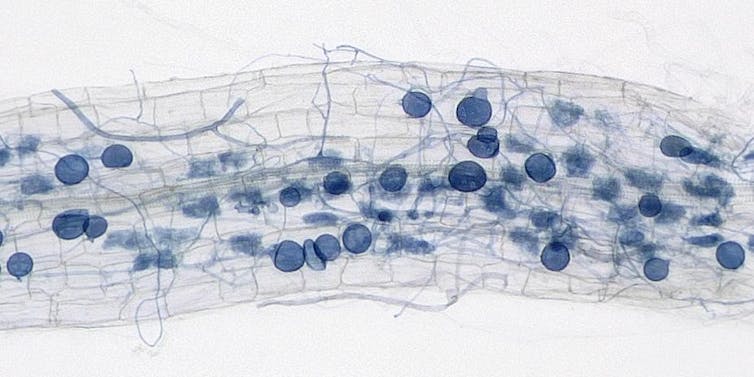
A magnified image shows dots and thin filaments weaving through the outer cells of a root.
A magnified view shows filaments and vesicles of arbuscular mycorrhizal fungi weaving through the outer cells of a plant root. Outside the root, the filaments of hyphae gather nutrients from the soil. Edouard Evangelisti, et al., New Phytologist, 2021, CC BY

In winter, the snowpack insulates mycorrhizal fungi and other microorganisms like a blanket, allowing them to continue to decompose soil organic matter, even when air temperatures above the snow are well below freezing. However, when rain washes out the snowpack or a healthy snowpack doesn’t form, water in the soil can later freeze – as can mycorrhizal fungi.

In a new study in the Rocky Mountain grasslands, we dug into plots of land that for three decades scientists led by ecologist John Harte had warmed by 2 degrees Celsius (3.6 Fahrenheit) using suspended heaters that mimicked the air temperature the area is likely to see by the end of this century.

Above ground, the plots shifted over that time from predominantly grassland to more desertlike shrublands. Under the surface, we found something else: There were noticeably fewer beneficial mycorrhizal fungi, which left plants less able to acquire nutrients or buffer themselves from environmental stressors like freezing temperatures and drought.

These changes represent a major shift in the ecosystem, one that, on a wide scale, could reverberate through the food web as the grasses and forbs, such as wildflowers, that cattle and wildlife rely on decline and are replaced by a more desertlike environment.

When plants and fungi get out of sync

Warmer winters and a changing snowpack can affect the growth of plants and fungi in a few important ways.

One of the first signs of changing winters is when the timing of plant, fungal and animal activities that rely on one another get out of sync. For example, a mountain of evidence from around the world has documented how early snowmelt can lead to flowers blooming before pollinators arrive.

Timing also matters for plants that rely on mycorrhizal fungi – their growth must overlap.

Since plants are cued to light in addition to temperature, whereas underground microorganisms are cued to temperature and nutrient availability, warmer winters may cause microorganisms to be active well before their plant counterparts.

A mountain with a meadow filled with grasses and wildflowers in the foreground.
A view across the subalpine grasslands outside the experimental plots. Stephanie Kivlin

At our research site, in a subalpine meadow in Colorado, we also initiated an early snowmelt experiment in April 2023 that advanced snowmelt in five large plots by about two weeks.

We found that the early snowmelt advanced mycorrhizal fungal growth by one week, but we didn’t find a corresponding change in the growth of plant roots. When mycorrhizal fungi are active before plants, the plants don’t benefit from the nutrients that mycorrhizal fungi are taking up from the soil.

Disappearing nutrients

Early snowmelt can also lead to a loss of nutrients from the soil.

When microorganisms decompose organic matter in warmer soils, nutrients accumulate in the air and water pockets between soil particles. These nutrients are then available for mycorrhizal fungi to transfer to plants. While mycorrhizal fungi transfer nutrients to the plant, other fungi are primarily decomposers that keep the nutrients for themselves.

However, if rain falls on the snow or the snow melts early, before plants are active, the nutrients can leach from the soil into lakes and streams. The effect is similar to fertilizer runoff from farm fields – the nutrients fuel algae growth, which can create low-oxygen dead zones. At the same time, plants in the field have fewer nutrients available.

This kind of nutrient leaching has happened in a variety of ecosystems with warming winters and rain-on-snow events, ranging from mountain grasslands in Colorado to temperate forests in New England and the Midwest.

Without a thick snowpack, soils can also freeze for longer periods in the winter, leading to lower microbial activity and scarce resources at the onset of spring.

The future of changing winters

Under all of these scenarios – a timing mismatch, more rain causing nutrients to leach out or frozen soil – warmer winters are leading to less spring growth.

Ecosystems are often resilient, however. Organisms could acclimate to lower nutrient concentrations or shift their ranges to more favorable conditions. How plants and mycorrhizal fungi both adapt will determine how this hidden world adjusts to changing winters.

So, the next time rain on snow or a snow drought delays your outdoor winter plans, remember that it’s more than a hassle for humans – it’s affecting that hidden world below, with potentially long-term effects.The Conversation

Stephanie Kivlin, Associate Professor of Ecology, University of Tennessee; Aimee Classen, Professor of Ecology and Evolutionary Biology, University of Michigan, and Lara A. Souza, Associate Professor of Plant Biology, University of Oklahoma

This article is republished from The Conversation under a Creative Commons license. Read the original article.

Filed Under: Featured, Kivlin

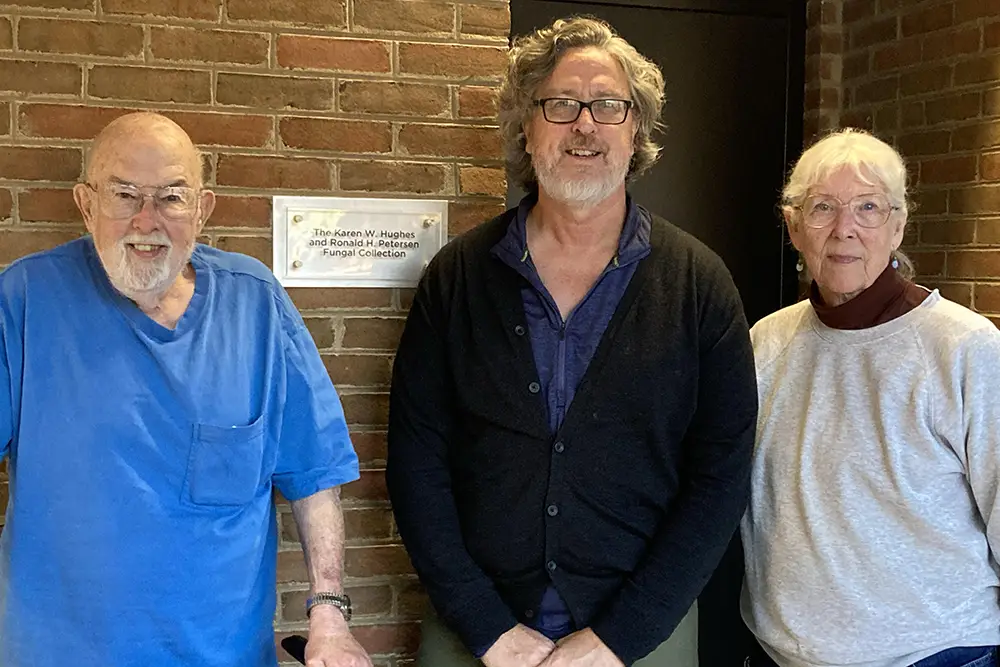
Ron Petersen, Brandon Matheny, and Karen Hughes stand in front of the newly dedicated "Karen W. Hughes and Ronald H. Peterson Fungal Collection" in the EEB Department.

EEB’s UT Fungal Collection Dedicated in Honor of Two UT Emeritus Professors

January 26, 2026 by Kaitlin Coyle

Ron Petersen, Brandon Matheny, and Karen Hughes stand in front of the newly dedicated "Karen W. Hughes and Ronald H. Peterson Fungal Collection" in the EEB Department.
(Left to right) Ron Petersen, Brandon Matheny (Professor and UT Fungal Collection Curator), and Karen Hughes

We are pleased to announce that the University of Tennessee Fungal Collection in the Ecology and Evolutionary Biology Dept. has been officially named and dedicated in honor of two UT emeritus professors, Karen W. Hughes and Ronald H. Petersen, whose careers have profoundly shaped modern mycology.

The UT Fungal Collection contains more than 80,000 specimens, representing approximately 11,000 species across 356 families. These two outstanding mycologists have made extraordinary contributions to the herbarium, depositing nearly 15,000 specimens (~19% of the entire UT Fungal Collection!), including more than 3,000 unique species. 

Of particular significance are the 190 type specimens they collected and deposited. Type specimens are foundational to biological science, serving as the permanent reference material used to describe and name new species. The scientific value of these specimens cannot be overstated. Their impact is further reflected in their scientific productivity, combined these two researchers have published more than 500 papers! 

We are honored to recognize Hughes and Petersen through this dedication and to celebrate their lasting contributions to the UT Herbarium and the global mycological community. 

Filed Under: Emeritus, Featured

Chuck Price, Research Assistant Professor.

Scholar Spotlight: Chuck Price

November 19, 2025 by Kaitlin Coyle

Filed Under: Faculty, Featured

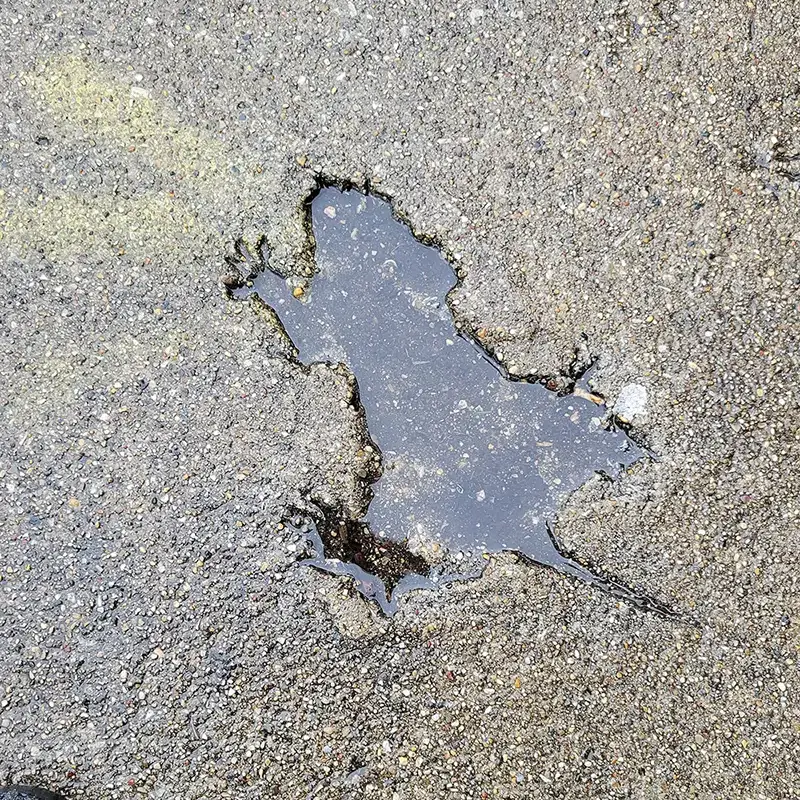
Imprint of the "Chicago Rat Hole" in Chicago’s Roscoe Village neighborhood.

Rats! Science Redefines Social Media Sensation

October 15, 2025 by Kaitlin Coyle

Filed Under: faculty, Featured

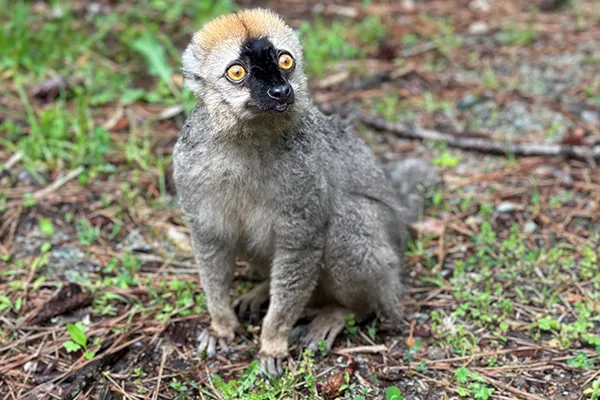
A lemur sitting on grass, branches, and twigs

Primate Research Reveals Unexpected Insight on Grip

September 17, 2025 by Kaitlin Coyle

Filed Under: Featured

Winner of the Volunteer of the Year Award, Mike Dennis, poses with Dean of the College of Arts and Sciences, Robert Hinde

Mike Dennis Wins College of Arts & Sciences Volunteer of the Year Award

September 16, 2025 by Kaitlin Coyle

Mike Dennis Wins College of Arts & Sciences Volunteer of the Year Award

Winner of the Volunteer of the Year Award, Mike Dennis, poses with Dean of the College of Arts and Sciences, Robert Hinde

Mike Dennis and Interim Executive Dean Robert Hinde

Congrats to Botany and EEB alumnus Mike Dennis, the 2025 recipient of the College of Arts & Sciences Volunteer of the Year Award! Dennis’ long-term support for graduate and undergraduate students through the Breedlove-Dennis awards has enabled field experiences in botany that have been so impactful for so many.

Read the full story on the College of Arts & Sciences.

Filed Under: Featured

A pair of gray female treefrogs in the grass

Crowded Conditions Muddle Frogs’ Mating Choices

September 8, 2025 by Kaitlin Coyle

Filed Under: Featured

Ecology & Evolutionary Biology

College of Arts and Sciences

569 Dabney Hall
Knoxville TN 37996-1610

Email: eeb@utk.edu

Phone: 865-974-3065

The University of Tennessee, Knoxville
Knoxville, Tennessee 37996
865-974-1000

The flagship campus of the University of Tennessee System and partner in the Tennessee Transfer Pathway.

ADA Privacy Safety Title IX