• Request Info
  • Visit
  • Apply
  • Give
  • Request Info
  • Visit
  • Apply
  • Give

Search

A-Z Index Map

Ecology & Evolutionary Biology

  • About
    • Give to EEB
    • Alumni
  • People
    • Faculty
    • Emeritus
    • Graduate Students
    • Adjunct
    • Postdocs
    • Research Staff
    • Administrative Staff
  • Undergraduate Students
    • EEB Concentration in Biology
    • EEB Minor
    • Honors
    • Course Descriptions
    • Naturalists Club
    • Fellowships
    • Be successful in EEB
  • Graduate Students
    • Graduate Student Handbook
    • FAQs
    • Applying to Grad School
    • GREBE
    • Funding
  • Research and Outreach
    • Research Highlights
    • Undergraduate Research Opportunities
    • Outreach Events
  • Collections and Facilities
    • UT Herbarium
    • UT Etnier Ichthyology Collection
    • Hesler Biology Greenhouses
    • Natural History Collections Course
    • Fellowships and Awards
    • Biology Field Station
  • News & Seminars
    • Current Seminars
    • News
    • Newsletter
Home » Featured

Featured

UT Researchers dig at the Rocky Mountain Biological Laboratory in Colorado, surrounded by trees, plants, and shrubbery.

Research Shows Warming Impact on Soil Ecosystem

February 19, 2026 by Kaitlin Coyle

Filed Under: Featured, Kivlin

The sun shines through snow covered trees and snow covered grass.

Stephanie Kivlin in ‘The Conversation:’ Warming winters are disrupting the hidden world of fungi – the result can shift mountain grasslands to scrub

February 19, 2026 by Kaitlin Coyle

Stephanie Kivlin in ‘The Conversation:’ Warming winters are disrupting the hidden world of fungi – the result can shift mountain grasslands to scrub

Stephanie Kivlin, University of Tennessee; Aimee Classen, University of Michigan, and Lara A. Souza, University of Oklahoma

When you look out across a snowy winter landscape, it might seem like nature is fast asleep. Yet, under the surface, tiny organisms are hard at work, consuming the previous year’s dead plant material and other organic matter.

These soil microorganisms – Earth’s recyclers – liberate nutrients that will act as fertilizer once grasses and other plants wake up with the spring snowmelt.

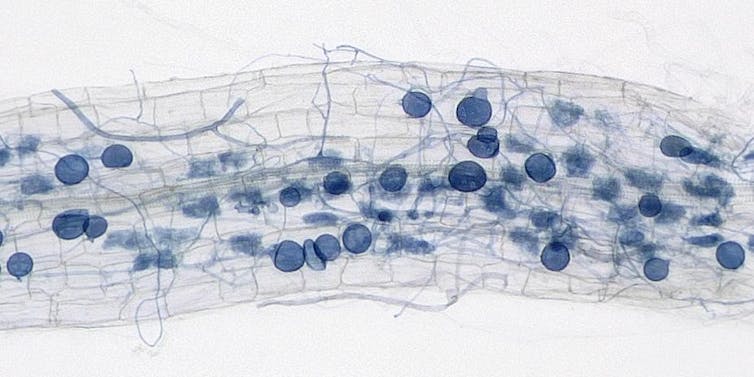
Key among them are arbuscular mycorrhizal fungi, found in over 75% of plant species around the planet. These threadlike fungi grow like webs inside plant roots, where they provide up to 50% of the plant’s nutrient and water supply in exchange for plant carbon, which the fungi use to grow and reproduce.

A magnified image shows dots and thin filaments weaving through the outer cells of a root.
A magnified view shows filaments and vesicles of arbuscular mycorrhizal fungi weaving through the outer cells of a plant root. Outside the root, the filaments of hyphae gather nutrients from the soil. Edouard Evangelisti, et al., New Phytologist, 2021, CC BY

In winter, the snowpack insulates mycorrhizal fungi and other microorganisms like a blanket, allowing them to continue to decompose soil organic matter, even when air temperatures above the snow are well below freezing. However, when rain washes out the snowpack or a healthy snowpack doesn’t form, water in the soil can later freeze – as can mycorrhizal fungi.

In a new study in the Rocky Mountain grasslands, we dug into plots of land that for three decades scientists led by ecologist John Harte had warmed by 2 degrees Celsius (3.6 Fahrenheit) using suspended heaters that mimicked the air temperature the area is likely to see by the end of this century.

Above ground, the plots shifted over that time from predominantly grassland to more desertlike shrublands. Under the surface, we found something else: There were noticeably fewer beneficial mycorrhizal fungi, which left plants less able to acquire nutrients or buffer themselves from environmental stressors like freezing temperatures and drought.

These changes represent a major shift in the ecosystem, one that, on a wide scale, could reverberate through the food web as the grasses and forbs, such as wildflowers, that cattle and wildlife rely on decline and are replaced by a more desertlike environment.

When plants and fungi get out of sync

Warmer winters and a changing snowpack can affect the growth of plants and fungi in a few important ways.

One of the first signs of changing winters is when the timing of plant, fungal and animal activities that rely on one another get out of sync. For example, a mountain of evidence from around the world has documented how early snowmelt can lead to flowers blooming before pollinators arrive.

Timing also matters for plants that rely on mycorrhizal fungi – their growth must overlap.

Since plants are cued to light in addition to temperature, whereas underground microorganisms are cued to temperature and nutrient availability, warmer winters may cause microorganisms to be active well before their plant counterparts.

A mountain with a meadow filled with grasses and wildflowers in the foreground.
A view across the subalpine grasslands outside the experimental plots. Stephanie Kivlin

At our research site, in a subalpine meadow in Colorado, we also initiated an early snowmelt experiment in April 2023 that advanced snowmelt in five large plots by about two weeks.

We found that the early snowmelt advanced mycorrhizal fungal growth by one week, but we didn’t find a corresponding change in the growth of plant roots. When mycorrhizal fungi are active before plants, the plants don’t benefit from the nutrients that mycorrhizal fungi are taking up from the soil.

Disappearing nutrients

Early snowmelt can also lead to a loss of nutrients from the soil.

When microorganisms decompose organic matter in warmer soils, nutrients accumulate in the air and water pockets between soil particles. These nutrients are then available for mycorrhizal fungi to transfer to plants. While mycorrhizal fungi transfer nutrients to the plant, other fungi are primarily decomposers that keep the nutrients for themselves.

However, if rain falls on the snow or the snow melts early, before plants are active, the nutrients can leach from the soil into lakes and streams. The effect is similar to fertilizer runoff from farm fields – the nutrients fuel algae growth, which can create low-oxygen dead zones. At the same time, plants in the field have fewer nutrients available.

This kind of nutrient leaching has happened in a variety of ecosystems with warming winters and rain-on-snow events, ranging from mountain grasslands in Colorado to temperate forests in New England and the Midwest.

Without a thick snowpack, soils can also freeze for longer periods in the winter, leading to lower microbial activity and scarce resources at the onset of spring.

The future of changing winters

Under all of these scenarios – a timing mismatch, more rain causing nutrients to leach out or frozen soil – warmer winters are leading to less spring growth.

Ecosystems are often resilient, however. Organisms could acclimate to lower nutrient concentrations or shift their ranges to more favorable conditions. How plants and mycorrhizal fungi both adapt will determine how this hidden world adjusts to changing winters.

So, the next time rain on snow or a snow drought delays your outdoor winter plans, remember that it’s more than a hassle for humans – it’s affecting that hidden world below, with potentially long-term effects.The Conversation

Stephanie Kivlin, Associate Professor of Ecology, University of Tennessee; Aimee Classen, Professor of Ecology and Evolutionary Biology, University of Michigan, and Lara A. Souza, Associate Professor of Plant Biology, University of Oklahoma

This article is republished from The Conversation under a Creative Commons license. Read the original article.

Filed Under: Featured, Kivlin

A yellow-green beetle rests on a green leaf.

Some dung beetles dig deep to keep their eggs cool

February 17, 2026 by ldutton

Filed Under: behavior, climate change, faculty, Featured, MAIN, Sheldon

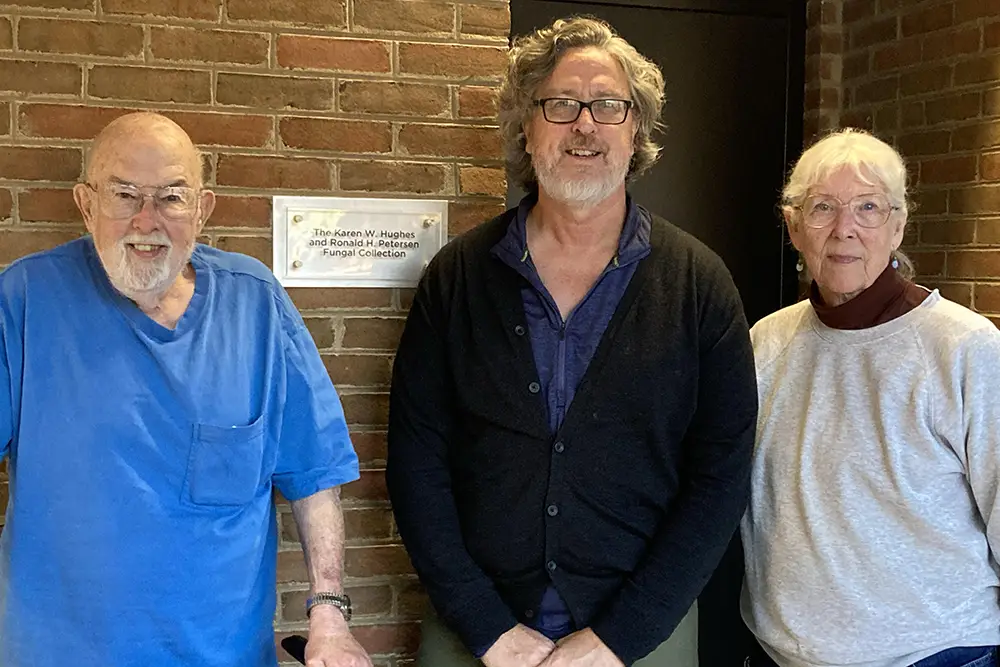
Ron Petersen, Brandon Matheny, and Karen Hughes stand in front of the newly dedicated "Karen W. Hughes and Ronald H. Peterson Fungal Collection" in the EEB Department.

EEB’s UT Fungal Collection Dedicated in Honor of Two UT Emeritus Professors

January 26, 2026 by Kaitlin Coyle

Ron Petersen, Brandon Matheny, and Karen Hughes stand in front of the newly dedicated "Karen W. Hughes and Ronald H. Peterson Fungal Collection" in the EEB Department.
(Left to right) Ron Petersen, Brandon Matheny (Professor and UT Fungal Collection Curator), and Karen Hughes

We are pleased to announce that the University of Tennessee Fungal Collection in the Ecology and Evolutionary Biology Dept. has been officially named and dedicated in honor of two UT emeritus professors, Karen W. Hughes and Ronald H. Petersen, whose careers have profoundly shaped modern mycology.

The UT Fungal Collection contains more than 80,000 specimens, representing approximately 11,000 species across 356 families. These two outstanding mycologists have made extraordinary contributions to the herbarium, depositing nearly 15,000 specimens (~19% of the entire UT Fungal Collection!), including more than 3,000 unique species. 

Of particular significance are the 190 type specimens they collected and deposited. Type specimens are foundational to biological science, serving as the permanent reference material used to describe and name new species. The scientific value of these specimens cannot be overstated. Their impact is further reflected in their scientific productivity, combined these two researchers have published more than 500 papers! 

We are honored to recognize Hughes and Petersen through this dedication and to celebrate their lasting contributions to the UT Herbarium and the global mycological community. 

Filed Under: Emeritus, Featured

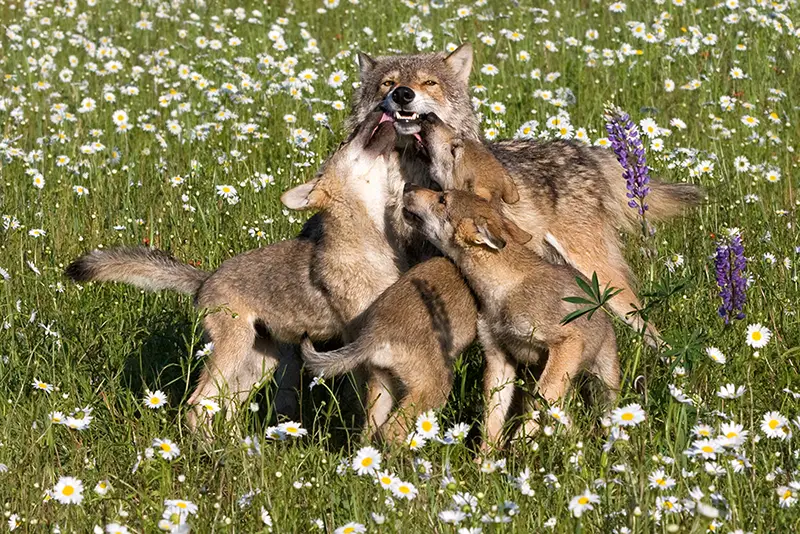
A group of wolf pups wrestle with their mom.

The Evolutionary Case for a Little Roughhousing

January 9, 2026 by ldutton

Filed Under: Featured

The University of Tennessee's Torchbearer statue holds a flame early in the morning.

EEB Says Goodbye to Sandy Echternacht

December 11, 2025 by ldutton

Filed Under: alumni, Featured

Chuck Price, Research Assistant Professor.

Scholar Spotlight: Chuck Price

November 19, 2025 by Kaitlin Coyle

Filed Under: Faculty, Featured

Fern Scientist Uncovers How Limits Fuel Evolution

October 30, 2025 by ldutton

Filed Under: Featured, MAIN, Suissa

Imprint of the "Chicago Rat Hole" in Chicago’s Roscoe Village neighborhood.

Rats! Science Redefines Social Media Sensation

October 15, 2025 by Kaitlin Coyle

Filed Under: faculty, Featured

Professor Emeritus Gordon Burghardt

Burghardt Paper Earns Biosemiotics Award

October 13, 2025 by ldutton

Filed Under: award, behavior, Burghardt, Emeritus, Featured, MAIN

  • 1
  • 2
  • 3
  • …
  • 6
  • Next Page »

Recent Posts

  • Research Shows Warming Impact on Soil Ecosystem
  • Stephanie Kivlin in ‘The Conversation:’ Warming winters are disrupting the hidden world of fungi – the result can shift mountain grasslands to scrub
  • Some dung beetles dig deep to keep their eggs cool
  • EEB’s UT Fungal Collection Dedicated in Honor of Two UT Emeritus Professors
  • The Evolutionary Case for a Little Roughhousing

Recent Comments

No comments to show.

College of Arts & Sciences

117 Natalie L. Haslam Music Center
1741 Volunteer Blvd.
Knoxville TN 37996-2600

Phone: 865-974-3241

Archives

  • February 2026
  • January 2026
  • December 2025
  • November 2025
  • October 2025
  • September 2025
  • August 2025
  • July 2025
  • April 2025
  • March 2025
  • February 2025
  • January 2025
  • November 2024
  • October 2024
  • August 2024
  • July 2024
  • June 2024
  • May 2024
  • April 2024
  • March 2024
  • February 2024
  • December 2023
  • November 2023
  • October 2023
  • September 2023
  • August 2023
  • July 2023
  • June 2023
  • May 2023
  • April 2023
  • March 2023
  • February 2023
  • January 2023
  • December 2022
  • November 2022
  • August 2022
  • June 2022
  • April 2022
  • March 2022
  • October 2021
  • August 2021
  • June 2021
  • April 2021
  • February 2021
  • January 2021
  • December 2020
  • November 2020
  • September 2020
  • August 2020
  • June 2020
  • May 2020
  • March 2020
  • February 2020
  • January 2020
  • December 2019
  • November 2019
  • October 2019
  • September 2019
  • August 2019
  • April 2019
  • March 2019
  • November 2018
  • June 2018
  • May 2018
  • April 2018
  • March 2018
  • February 2018
  • January 2018
  • December 2017
  • November 2017
  • October 2017
  • September 2017
  • August 2017
  • July 2017
  • June 2017
  • May 2017
  • April 2017
  • March 2017
  • February 2017
  • January 2017
  • December 2016
  • November 2016
  • October 2016
  • September 2016
  • August 2016
  • July 2016
  • June 2016
  • May 2016
  • April 2016
  • March 2016
  • February 2016
  • January 2016
  • December 2015
  • November 2015
  • October 2015
  • September 2015
  • August 2015
  • July 2015
  • June 2015
  • April 2015
  • March 2015
  • February 2015
  • January 2015
  • November 2014
  • October 2014
  • September 2014
  • August 2014
  • July 2014
  • June 2014
  • May 2014
  • April 2014
  • March 2014
  • February 2014
  • January 2014
  • December 2013
  • November 2013
  • October 2013
  • September 2013
  • August 2013
  • July 2013
  • June 2013
  • May 2013
  • April 2013
  • March 2013
  • January 2013
  • December 2012
  • October 2012
  • September 2012
  • August 2012
  • June 2012
  • May 2012
  • April 2012
  • March 2012
  • February 2012
  • January 2012
  • December 2011
  • October 2011
  • September 2011
  • August 2011
  • July 2011
  • June 2011
  • May 2011
  • April 2011
  • March 2011
  • February 2011
  • January 2011
  • November 2010

Categories

  • Adjunct
  • alumni
  • ants
  • Armsworth
  • Auerbach
  • Australia
  • award
  • Bagby
  • Bailey
  • Baker Center
  • Banbury
  • bats
  • behavior
  • Blum
  • Boake
  • book
  • Boyer
  • Budke
  • Burghardt
  • citizen science
  • Classen
  • climate change
  • conservation
  • corker
  • course
  • damage
  • Darwin Day
  • DDIG
  • Derryberry
  • DeSelm
  • DOE
  • Echternacht
  • ecology
  • education
  • Emeritus
  • endowment
  • EOL
  • EUReCA
  • events
  • extinction
  • facilities
  • Faculty
  • faculty
  • Featured
  • Fefferman
  • fellowship
  • field course
  • fish
  • Fitzpatrick
  • Fordyce
  • Former Faculty
  • Former Graduate Students
  • fundraiser
  • fungi
  • Gaoue
  • Gavrilets
  • Giam
  • Gilchrist
  • graduate
  • Graduate Students
  • graduation
  • grant
  • Great Smoky Mountains NP
  • GREBE
  • greenhouse
  • Gross
  • Hallam
  • head
  • Hemingway
  • herbarium
  • Hughes
  • Hulsey
  • human evolution
  • intern
  • invasive
  • jobs
  • Kalisz
  • Kivlin
  • Kwit
  • MAIN
  • math
  • Matheny
  • McCracken
  • media
  • modeling
  • National Academy of Sciences
  • Nature
  • NCEAS
  • NEON
  • News Sentinel
  • newsletter
  • newspaper
  • NIMBioS
  • NSF
  • Nyari
  • O'Meara
  • obituary
  • ORNL
  • outreach
  • Papes
  • Petersen
  • placement
  • plos one
  • PNAS
  • podcast
  • popular media
  • postdoc
  • publication
  • Research Staff
  • REU
  • Riechert
  • Rstats
  • Russo
  • Sanders
  • Schilling
  • Schussler
  • Schweitzer
  • Science
  • SciFest
  • seminar
  • Sheldon
  • Simberloff
  • slate
  • Small
  • staff
  • STEM
  • Stockmaier
  • Suissa
  • summer
  • Tanner
  • taxonomy
  • teaching
  • TennesseeToday
  • Uncategorized
  • Undergrad News
  • undergraduate
  • wildflower pilgrimage
  • Williams
  • WNS
  • Wofford

Copyright © 2026 · University of Tennessee, Knoxville WDS Genesis Child on Genesis Framework · WordPress · Log in

Ecology & Evolutionary Biology

College of Arts and Sciences

569 Dabney Hall
Knoxville TN 37996-1610

Email: eeb@utk.edu

Phone: 865-974-3065

The University of Tennessee, Knoxville
Knoxville, Tennessee 37996
865-974-1000

The flagship campus of the University of Tennessee System and partner in the Tennessee Transfer Pathway.

ADA Privacy Safety Title IX