• Request Info
  • Visit
  • Apply
  • Give
  • Request Info
  • Visit
  • Apply
  • Give

Search

  • A-Z Index
  • Map

Ecology & Evolutionary Biology

  • About
    • Give to EEB
    • Alumni
  • People
    • Faculty
    • Emeritus
    • Graduate Students
    • Adjunct
    • Postdocs
    • Research Staff
    • Administrative Staff
  • Undergraduate Students
    • EEB Concentration in Biology
    • EEB Minor
    • Honors
    • Course Descriptions
    • Naturalists Club
    • Fellowships
    • Be successful in EEB
  • Graduate Students
    • Graduate Student Handbook
    • FAQs
    • Applying to Grad School
    • GREBE
    • Funding
  • Research and Outreach
    • Research Highlights
    • Undergraduate Research Opportunities
    • Outreach Events
  • Collections and Facilities
    • UT Herbarium
    • UT Etnier Ichthyology Collection
    • Hesler Biology Greenhouses
    • Natural History Collections Course
    • Fellowships and Awards
    • Biology Field Station
  • News & Seminars
    • Current Seminars
    • News
    • Newsletter
Home » fellowship » Page 3

fellowship

Beattie Fellowship for Miller

March 20, 2015 by wpeeb

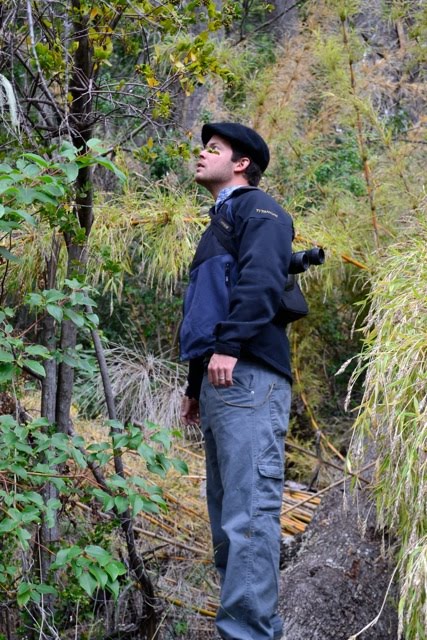
Chelsea Miller (Kwit Lab) has been awarded Catherine H. Beattie Fellowship for Conservation Horticulture from the Garden Club of America and the Center for Plant Conservation.   Each year, the grant enables a graduate student in biology, horticulture, or a related field to conduct research on a rare or endangered U.S. plant. Preference is given to students focusing on the endangered flora of the Carolinas or the southeastern United States.

Filed Under: fellowship, graduate, Kwit, MAIN

2 NSF GRFP Awards for EEB Students

May 13, 2014 by wpeeb

Alix Pfenningwerth (EEB grad student) and Su’ad Yoon (EEB undergrad) both got NSF GRFP awards.  Brian Looney and Katie Massana (EEB grad students) got honorable mentions.  Across UT, only 5 students received NSF GRFP awards, and only 3 students received honorable mentions, so EEB had an excellent showing!

UPDATE: For information about all 5 UT awardees, please read the Tennessee Today press release.

Filed Under: fellowship, graduate, MAIN, NSF, undergraduate

Division of Biology Graduate Student Awards

April 16, 2014 by wpeeb

EEB congratulates our graduate students who won awards from UT’s Division of Biology!

Alexander Hollaender Fellowship Award
Zachary Marion (EEB)

Science Alliance Graduate Student Teaching Awards
Phillip Hollingsworth (EEB)

Biology Award
Lacy Chick (EEB)

Filed Under: award, fellowship, graduate, MAIN

Grad Student Achievements

October 31, 2013 by wpeeb

In 2012-2013, thirty-nine EEB grad students submitted progress reports (1st years do not submit a report).  This is what they self-reported:

  • 59 papers published since their last progress reports (in peer-reviewed, international journals, some very high profile; there is some overlap with multi-authored UT authors);
  • 93 presentations given at local, national and international conferences/workshops;
  • $334,796 in grants/fellowships awarded in 12-13 (not counting fellowships awarded in previous years but still funding their research);
  • 3.5 service/outreach activities each, on average (including judging science fairs, manuscript reviews for journals, local events-Darwin Days, Boo at Zoo, etc., talks to the public, press interviews-Knox News, WBIR, Daily Beacon, Today Show, Orlando News Sentinel, blogs, etc.).

We haven’t quantified service/outreach before and it looks like most of our students do something, some of them quite a lot!

It’s great to see our grad students succeeding on so many levels, and sharing their expertise with others.


Filed Under: Darwin Day, fellowship, graduate, grant, MAIN, outreach, publication

NIMBioS postdocs

June 22, 2011 by wpeeb

Call for Postdoctoral Fellowship Applications at NIMBioS

The National Institute for Mathematical and Biological Synthesis (NIMBioS), located at the Univ. of Tennessee, Knoxville, is currently accepting applications for postdoctoral scholarship at the interface between mathematics and biology. Highest priority will be given to those with explicit plans to develop their ability to effectively carry on research across these fields. We are particularly interested in requests to support research that integrates diverse fields, requires synthesis at multiple scales, and/or makes use of or requires development of new mathematical/computational approaches. NIMBioS Postdoctoral Fellows are chosen based upon indications that the applicant’s research plans are consistent with the mission of NIMBioS, the applicant has the demonstrated ability to carry out the proposed research, and the opportunities provided through NIMBioS will enhance the capacity for the research to be completed in an efficient and timely manner. For additional information on NIMBioS, visit www.nimbios.org. Support: annual stipend of $51,000, full University of Tennessee employee fringe benefits, and an annual travel allowance of $2,000. Requests for Support: Submit a brief project description, references, and CV following the guidelines available at http://www.nimbios.org/postdocs/ to Dr. Chris Welsh at cwelsh@utk.edu. Deadline: NIMBioS postdoctoral requests for support are reviewed three times per year, and the selected researchers are offered positions at NIMBioS where they conduct research that is mostly self-directed. The deadline for activities beginning in early 2012 is Sept. 1, 2011. All letters of recommendation should be submitted before the request deadline.

Filed Under: fellowship, MAIN, NIMBioS, postdoc

NIMBioS postdocs

June 22, 2011 by wpeeb

Call for Postdoctoral Fellowship Applications at NIMBioS

The National Institute for Mathematical and Biological Synthesis (NIMBioS), located at the Univ. of Tennessee, Knoxville, is currently accepting applications for postdoctoral scholarship at the interface between mathematics and biology. Highest priority will be given to those with explicit plans to develop their ability to effectively carry on research across these fields. We are particularly interested in requests to support research that integrates diverse fields, requires synthesis at multiple scales, and/or makes use of or requires development of new mathematical/computational approaches. NIMBioS Postdoctoral Fellows are chosen based upon indications that the applicant’s research plans are consistent with the mission of NIMBioS, the applicant has the demonstrated ability to carry out the proposed research, and the opportunities provided through NIMBioS will enhance the capacity for the research to be completed in an efficient and timely manner. For additional information on NIMBioS, visit www.nimbios.org. Support: annual stipend of $51,000, full University of Tennessee employee fringe benefits, and an annual travel allowance of $2,000. Requests for Support: Submit a brief project description, references, and CV following the guidelines available at http://www.nimbios.org/postdocs/ to Dr. Chris Welsh at cwelsh@utk.edu. Deadline: NIMBioS postdoctoral requests for support are reviewed three times per year, and the selected researchers are offered positions at NIMBioS where they conduct research that is mostly self-directed. The deadline for activities beginning in early 2012 is Sept. 1, 2011. All letters of recommendation should be submitted before the request deadline.

Filed Under: fellowship, MAIN, NIMBioS, postdoc

Mariano Rodriguez-Cabal awarded NSF DDIG fellowship for work on invasion ecology in Patagonia

April 19, 2011 by wpeeb

EEB grad student Mariano Rodriguez-Cabal was just awarded an NSF DDIG fellowship for his PhD work on invasion ecology in Patagonia:

DISSERTATION RESEARCH: Direct and indirect effects of invasive species on plant-seed disperser mutualisms.

Many plants rely on fruit-eating animals to disperse their seeds. This interaction benefits both the plant and the animal and is therefore termed a mutualism. Because seed dispersal can determine the abundance and range of the plant, seed dispersal mutualisms can benefit other species that use the plant for food or shelter and thus affect patterns of biodiversity across the landscape. The introduction by humans of new species into a habitat can disrupt seed dispersal mutualisms, but we know little about such disruptions may affect other, interrelated species. This project will test the larger ecological effects of disruption of an important seed dispersal mutualism in the northern temperate forests of Patagonia in Argentina. The mistletoe Tristerix corymbosus is the sole winter nectar source for the hummingbird Sephanoides sephaniodes, which remains in the region year-round and is in turn responsible for the pollination of nearly 20% of the endemic woody flora in the region. The seeds of the mistletoe are dispersed exclusively by the marsupial Dromiciops gliroides. After passing through the gut of the marsupial, most of the defecated seeds stick to branches of maqui, Aristotelia chilensis, the most abundant understory shrub in the forest and the most common host for the mistletoe. Because of these close ecological relationships, exotic species that reduce the density of maqui could also reduce the abundances of the mistletoe, the hummingbird, and the marsupial, changing the forest as a whole. This project will test the effects of the exotic wasp Vespula germanica and of exotic ungulates on maqui populations and on the linked species in the forest.

Conservation of biological diversity is important to human society, and one of the major threats to biodiversity are the accidental and intentional introductions of new species around the world by humans. This research will further our understanding of how introduced species can affect biodiversity and help guide management to conserve diversity. The research will also strengthen international scientific collaboration and training.

Filed Under: fellowship, graduate, grant, MAIN, NSF, Sanders

Mariano Rodriguez-Cabal awarded NSF DDIG fellowship for work on invasion ecology in Patagonia

April 19, 2011 by wpeeb

EEB grad student Mariano Rodriguez-Cabal was just awarded an NSF DDIG fellowship for his PhD work on invasion ecology in Patagonia:

DISSERTATION RESEARCH: Direct and indirect effects of invasive species on plant-seed disperser mutualisms.

Many plants rely on fruit-eating animals to disperse their seeds. This interaction benefits both the plant and the animal and is therefore termed a mutualism. Because seed dispersal can determine the abundance and range of the plant, seed dispersal mutualisms can benefit other species that use the plant for food or shelter and thus affect patterns of biodiversity across the landscape. The introduction by humans of new species into a habitat can disrupt seed dispersal mutualisms, but we know little about such disruptions may affect other, interrelated species. This project will test the larger ecological effects of disruption of an important seed dispersal mutualism in the northern temperate forests of Patagonia in Argentina. The mistletoe Tristerix corymbosus is the sole winter nectar source for the hummingbird Sephanoides sephaniodes, which remains in the region year-round and is in turn responsible for the pollination of nearly 20% of the endemic woody flora in the region. The seeds of the mistletoe are dispersed exclusively by the marsupial Dromiciops gliroides. After passing through the gut of the marsupial, most of the defecated seeds stick to branches of maqui, Aristotelia chilensis, the most abundant understory shrub in the forest and the most common host for the mistletoe. Because of these close ecological relationships, exotic species that reduce the density of maqui could also reduce the abundances of the mistletoe, the hummingbird, and the marsupial, changing the forest as a whole. This project will test the effects of the exotic wasp Vespula germanica and of exotic ungulates on maqui populations and on the linked species in the forest.

Conservation of biological diversity is important to human society, and one of the major threats to biodiversity are the accidental and intentional introductions of new species around the world by humans. This research will further our understanding of how introduced species can affect biodiversity and help guide management to conserve diversity. The research will also strengthen international scientific collaboration and training.

Filed Under: fellowship, graduate, grant, MAIN, NSF, Sanders

Incoming Classen lab student

April 18, 2011 by wpeeb

Relena Ribbons will join the department as a PhD student in the Classen lab this fall and was awarded a Center for Interdisciplinary Research and Graduate Education (CIRE) fellowship.

Filed Under: Classen, fellowship, graduate, MAIN

Incoming Classen lab student

April 18, 2011 by wpeeb

Relena Ribbons will join the department as a PhD student in the Classen lab this fall and was awarded a Center for Interdisciplinary Research and Graduate Education (CIRE) fellowship.

Filed Under: Classen, fellowship, graduate, MAIN

  • « Previous Page
  • 1
  • 2
  • 3

Recent Posts

  • EEB Says Goodbye to Sandy Echternacht
  • Scholar Spotlight: Chuck Price
  • Fern Scientist Uncovers How Limits Fuel Evolution
  • Rats! Science Redefines Social Media Sensation
  • Burghardt Paper Earns Biosemiotics Award

Recent Comments

No comments to show.

College of Arts & Sciences

117 Natalie L. Haslam Music Center
1741 Volunteer Blvd.
Knoxville TN 37996-2600

Phone: 865-974-3241

Archives

  • December 2025
  • November 2025
  • October 2025
  • September 2025
  • August 2025
  • July 2025
  • April 2025
  • March 2025
  • February 2025
  • January 2025
  • November 2024
  • October 2024
  • August 2024
  • July 2024
  • June 2024
  • May 2024
  • April 2024
  • March 2024
  • February 2024
  • December 2023
  • November 2023
  • October 2023
  • September 2023
  • August 2023
  • July 2023
  • June 2023
  • May 2023
  • April 2023
  • March 2023
  • February 2023
  • January 2023
  • December 2022
  • November 2022
  • August 2022
  • June 2022
  • April 2022
  • March 2022
  • October 2021
  • August 2021
  • June 2021
  • April 2021
  • February 2021
  • January 2021
  • December 2020
  • November 2020
  • September 2020
  • August 2020
  • June 2020
  • May 2020
  • March 2020
  • February 2020
  • January 2020
  • December 2019
  • November 2019
  • October 2019
  • September 2019
  • August 2019
  • April 2019
  • March 2019
  • November 2018
  • June 2018
  • May 2018
  • April 2018
  • March 2018
  • February 2018
  • January 2018
  • December 2017
  • November 2017
  • October 2017
  • September 2017
  • August 2017
  • July 2017
  • June 2017
  • May 2017
  • April 2017
  • March 2017
  • February 2017
  • January 2017
  • December 2016
  • November 2016
  • October 2016
  • September 2016
  • August 2016
  • July 2016
  • June 2016
  • May 2016
  • April 2016
  • March 2016
  • February 2016
  • January 2016
  • December 2015
  • November 2015
  • October 2015
  • September 2015
  • August 2015
  • July 2015
  • June 2015
  • April 2015
  • March 2015
  • February 2015
  • January 2015
  • November 2014
  • October 2014
  • September 2014
  • August 2014
  • July 2014
  • June 2014
  • May 2014
  • April 2014
  • March 2014
  • February 2014
  • January 2014
  • December 2013
  • November 2013
  • October 2013
  • September 2013
  • August 2013
  • July 2013
  • June 2013
  • May 2013
  • April 2013
  • March 2013
  • January 2013
  • December 2012
  • October 2012
  • September 2012
  • August 2012
  • June 2012
  • May 2012
  • April 2012
  • March 2012
  • February 2012
  • January 2012
  • December 2011
  • October 2011
  • September 2011
  • August 2011
  • July 2011
  • June 2011
  • May 2011
  • April 2011
  • March 2011
  • February 2011
  • January 2011
  • November 2010

Categories

  • Adjunct
  • alumni
  • ants
  • Armsworth
  • Auerbach
  • Australia
  • award
  • Bagby
  • Bailey
  • Baker Center
  • Banbury
  • bats
  • behavior
  • Blum
  • Boake
  • book
  • Boyer
  • Budke
  • Burghardt
  • citizen science
  • Classen
  • climate change
  • conservation
  • corker
  • course
  • damage
  • Darwin Day
  • DDIG
  • Derryberry
  • DeSelm
  • DOE
  • Echternacht
  • ecology
  • education
  • Emeritus
  • endowment
  • EOL
  • EUReCA
  • events
  • extinction
  • facilities
  • Faculty
  • faculty
  • Featured
  • Fefferman
  • fellowship
  • field course
  • fish
  • Fitzpatrick
  • Fordyce
  • Former Faculty
  • Former Graduate Students
  • fundraiser
  • fungi
  • Gaoue
  • Gavrilets
  • Giam
  • Gilchrist
  • graduate
  • Graduate Students
  • graduation
  • grant
  • Great Smoky Mountains NP
  • GREBE
  • greenhouse
  • Gross
  • Hallam
  • head
  • Hemingway
  • herbarium
  • Hughes
  • Hulsey
  • human evolution
  • intern
  • invasive
  • jobs
  • Kalisz
  • Kivlin
  • Kwit
  • MAIN
  • math
  • Matheny
  • McCracken
  • media
  • modeling
  • National Academy of Sciences
  • Nature
  • NCEAS
  • NEON
  • News Sentinel
  • newsletter
  • newspaper
  • NIMBioS
  • NSF
  • Nyari
  • O'Meara
  • obituary
  • ORNL
  • outreach
  • Papes
  • Petersen
  • placement
  • plos one
  • PNAS
  • podcast
  • popular media
  • postdoc
  • publication
  • Research Staff
  • REU
  • Riechert
  • Rstats
  • Russo
  • Sanders
  • Schilling
  • Schussler
  • Schweitzer
  • Science
  • SciFest
  • seminar
  • Sheldon
  • Simberloff
  • slate
  • Small
  • staff
  • STEM
  • Stockmaier
  • Suissa
  • summer
  • Tanner
  • taxonomy
  • teaching
  • TennesseeToday
  • Uncategorized
  • Undergrad News
  • undergraduate
  • wildflower pilgrimage
  • Williams
  • WNS
  • Wofford

Copyright © 2025 · University of Tennessee, Knoxville WDS Genesis Child on Genesis Framework · WordPress · Log in

Ecology & Evolutionary Biology

College of Arts and Sciences

569 Dabney Hall
Knoxville TN 37996-1610

Email: eeb@utk.edu

Phone: 865-974-3065

The University of Tennessee, Knoxville
Knoxville, Tennessee 37996
865-974-1000

The flagship campus of the University of Tennessee System and partner in the Tennessee Transfer Pathway.

ADA Privacy Safety Title IX