Happy Birthday, Darwin!
Biologist Charles Darwin would be 216 years-old this month, and museum educators and UT scientists at the McClung Museum of Natural History and Culture are celebrating with Darwin Day on February 23.
by ldutton
Biologist Charles Darwin would be 216 years-old this month, and museum educators and UT scientists at the McClung Museum of Natural History and Culture are celebrating with Darwin Day on February 23.
by ldutton
Seven faculty members from the University of Tennessee, Knoxville — five from the Tickle College of Engineering and two from the College of Arts and Sciences — have been named to Clarivate’s Highly Cited Researchers list for 2024. The honor is bestowed on only one in 1,000 of the world’s scientists and social scientists.
by Logan Judy
Imagine a photograph of your great-grandparents, grandparents and parents side by side. You’d see a resemblance, but each generation would look distinct from its predecessors. This is the process of evolution in its simplest form: descent with modification.
Over many generations, a staggering amount of modification is possible. This is how the diversity of life on Earth came to be.
This idea, though, has long been misunderstood as a path that leads in one direction toward “higher” or “better” organisms. For example, Rudolph Zallinger’s famous 1965 Time-Life illustration “The Road to Homo Sapiens” shows humans evolving in a stepwise fashion from ape-like ancestors to modern man.
Extending this perspective beyond humans, early paleontological theories about ancient life supported the idea of orthogenesis, or “progressive evolution,” in which each generation of a lineage advanced toward more sophisticated or optimized forms.
But evolution has no finish line. There is no end goal, no final state. Organisms evolve by natural selection acting at a specific geologic moment, or simply by drift without strong selection in any direction.
In a recently published study that I carried out with Makaleh Smith, then an undergraduate research intern at Harvard University who was funded by the National Science Foundation, we sought to study whether a one-way model of reproductive evolution always held true in plants. To the contrary, we found that in many types of ferns – one of the oldest groups of plants on Earth – evolution of reproductive strategies has been a two-way street, with plants at times evolving “backward” to less specialized forms.
Selection pressures can change in a heartbeat and steer evolution in unexpected directions.
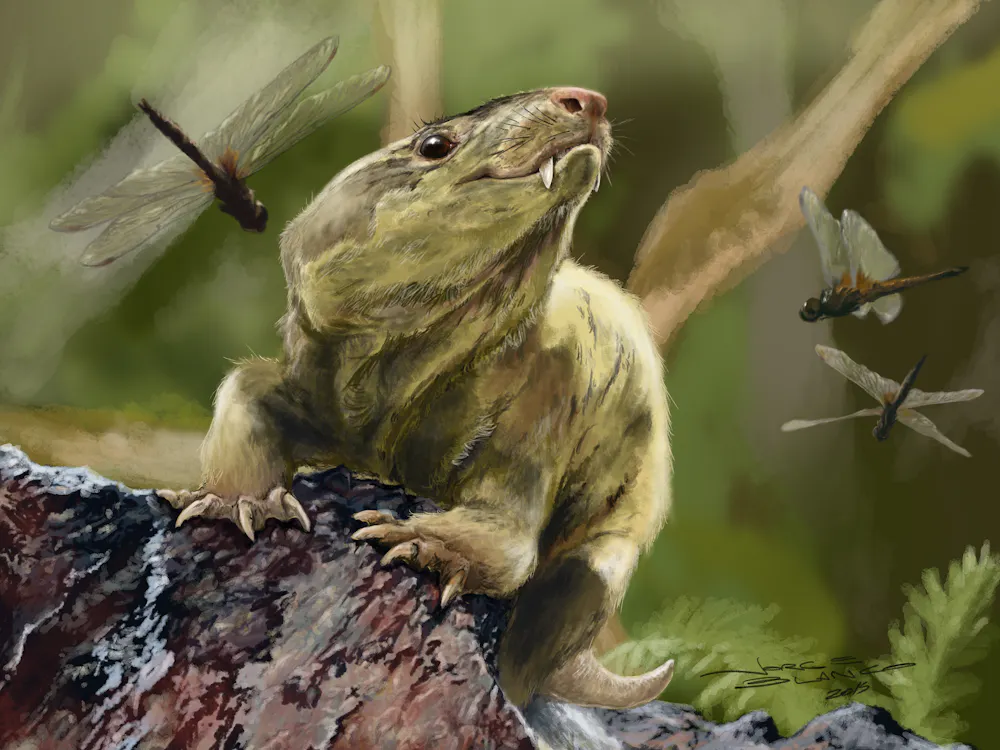
Take dinosaurs and mammals, for instance. For over 150 million years, dinosaurs exerted a strong selection pressure on Jurassic mammals, which had to remain small and live underground to avoid being hunted to extinction.
Then, about 66 million years ago, the Chicxulub asteroid wiped out most nonavian dinosaurs. Suddenly, small mammals were relieved of their strong predatory selection pressure and could live above ground, eventually evolving into larger forms, including humans.
In 1893, Belgian paleontologist Louis Dollo introduced the idea that once an organism progresses to a certain point, it does not revert to a previous state in the exact way in which it evolved – even if it encounters conditions identical to those it once experienced. Dollo’s law, as it came to be known, implies that specialization is largely a one-way street, with organisms accumulating layers of complexity that make backward evolution impossible.
While Dollo’s law has been criticized, and its original idea has largely faded from popular discourse, this perspective still influences aspects of biology today.
Museums often depict animal evolution as a straight-line progression toward higher stages, but they’re not the only sources of this narrative. It also appears in teaching about the evolution of reproduction in plants.
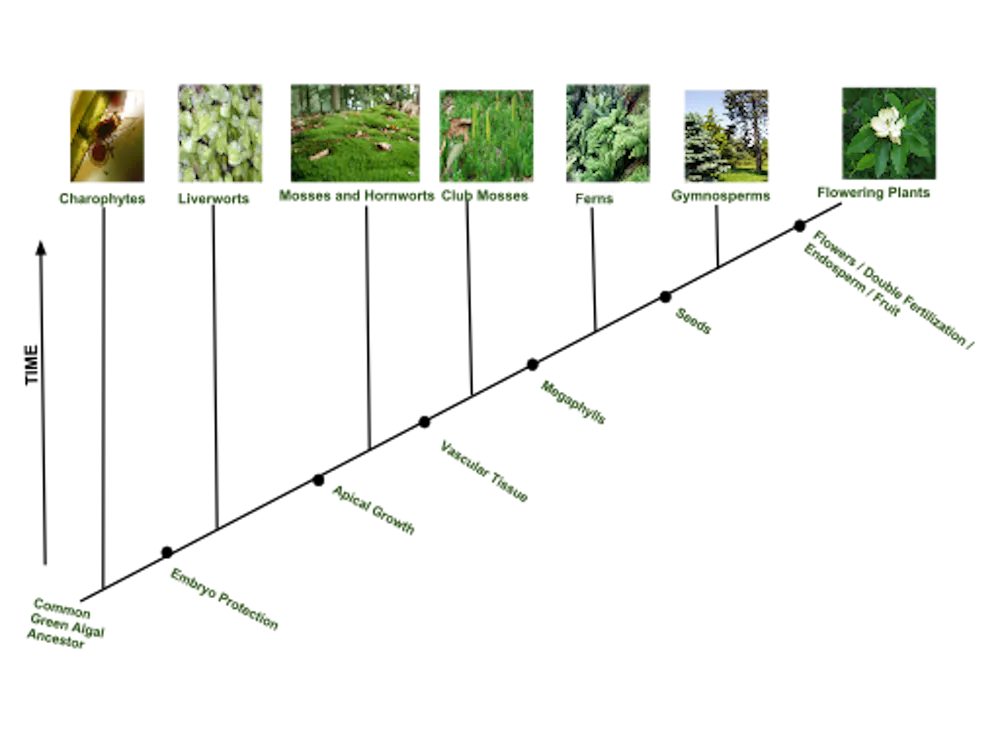
The earliest vascular plants – those with tissues that can move water and minerals throughout the plant – had leafless, stemlike structures called telomes, with capsules at their tips called sporangia that produced spores. The telomes did both of the plants’ big jobs: converting sunlight to energy through photosynthesis and releasing spores to produce new plants.
Fossil records show that over time, plants developed more specialized structures that divided these reproductive and photosynthetic functions. Moving through plant lineages, from spore-bearing lycophytes to ferns to flowering plants, reproduction becomes more and more specialized. Indeed, the flower is often diagrammed as the end goal of botanical evolution.
Across the plant kingdom, once species evolved reproductive structures such as seeds, cones and flowers, they did not revert to simpler, undifferentiated forms. This pattern supports a progressive increase in reproductive complexity. But ferns are an important exception.
Ferns have multiple reproductive strategies. Most species combine spore development and photosynthesis on a single leaf type – a strategy called monomorphism. Others separate these functions to have one leaf type for photosynthesis and another for reproduction – a strategy called dimorphism.
If the patterns of specialization seen broadly across plants were universal, we would expect that once a lineage of ferns evolved dimorphism, it could not shift course and revert to monomorphism. However, using natural history collections and algorithms for estimating evolution in ferns, Smith and I found exceptions to this pattern.
Within a family known as chain ferns (Blechnaceae), we found multiple cases in which plants had evolved highly specialized dimorphism, but then reverted to the more general form of monomorphism.
Why might ferns have such flexible reproductive strategies? The answer lies in what they lack: seeds, flowers and fruits. This distinguishes them from the more than 350,000 species of seed plants living on Earth today.
Imagine taking a fertile fern leaf, shrinking it down and wrapping it up tightly into a tiny pellet. That’s basically what an unfertilized seed is – a highly modified dimorphic fern leaf, in a capsule.
Seeds are just one highly specialized structure in a suite of reproductive traits, each building on the last, creating a form so specific that reversal becomes nearly impossible. But because living ferns don’t have seeds, they can modify where on their leaves they place their spore-producing structures.
Our findings suggest that not all reproductive specialization in plants is irreversible. Instead, it may depend on how many layers of specialization plants have acquired over time.
In today’s rapidly changing world, knowing which organisms or traits are “locked in” could be important for predicting how species respond to new environmental challenges and human-imposed habitat changes.
Organisms that have evolved down “one-way” paths may lack the flexibility to respond to new selection pressures in particular ways and have to figure out new strategies to change. In lineages such as ferns, species may retain their ability to “evolve backward,” even after specialization.
Ultimately, our study underscores a fundamental lesson in evolutionary biology: There is no “correct” direction in evolution, no march toward an end goal. Evolutionary pathways are more like tangled webs, with some branches diverging, others converging, and some even looping back on themselves.
Jacob S. Suissa, Assistant Professor of Plant Evolutionary Biology, University of Tennessee
This article is republished from The Conversation under a Creative Commons license. Read the original article.
by ldutton
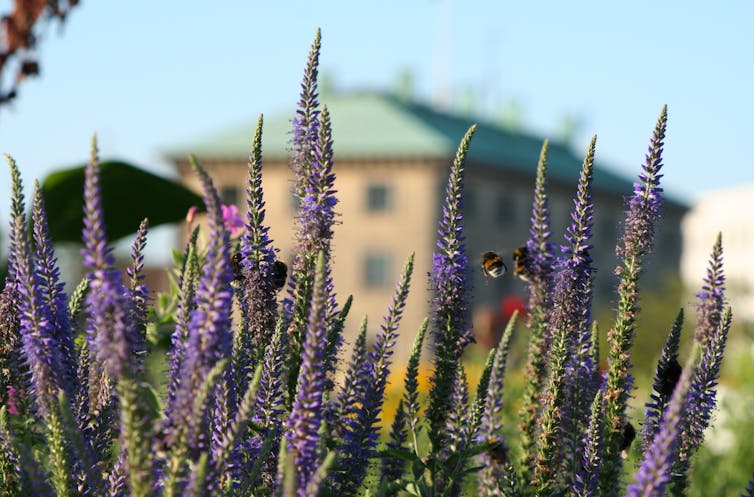
In order to reproduce, most flowering plants rely on animals to move their pollen. In turn, pollinators rely on flowers for food, including both nectar and pollen. If you’re a gardener, you might want to support this partnership by planting flowers. But if you live in an area without a lot of green space, you might wonder whether it’s worth the effort.
I study bees and other pollinators. My new research shows that bees, in particular, don’t really care about the landscape surrounding flower gardens. They seem to zero in on the particular types of flowers they like, no matter what else is around.
To design a garden that supports the greatest number and diversity of pollinators, don’t worry about what your neighbors are doing or not doing. Just focus on planting different kinds of flowers – and lots of them.
To test whether bees are more plentiful in natural areas, my team and I planted identical gardens – roughly 10 feet by 6½ feet (3 x 2 meters) – in five different landscapes around eastern Tennessee that ranged from cattle pastures and organic farms to a botanical garden and an arboretum. All five gardens were planted in March of 2019 and contained 18 species of native perennials from the mint, sunflower and pea families.
Over the course of the flowering season, we surveyed pollinators by collecting the insects that landed on the flowers, so we could count and identify them. The sampling took place in a carefully standardized way. Each week we sampled every flowering plant in every garden, in every landscape, for five minutes each. We used a modified, hand-held vacuum we called the “Bug Vac” and repeated this sampling every week that flowers were in bloom for three years.
We wanted to test whether the area immediately surrounding the gardens – the floral neighborhood – made a difference in pollinator abundance, diversity and identity. So we also surveyed the area around the gardens, in a radius of about 160 feet (roughly 50 meters).
To our surprise, we found the surrounding terrain had very little influence on the abundance, diversity and composition of the pollinators coming to our test gardens. Instead, they were mostly determined by the number and type of flowers. Otherwise, pollinators were remarkably similar at all sites. A sunflower in a cattle pasture had, by and large, the same number and types of visitors as a sunflower in a botanical garden.
We used native perennial plants in our study because there’s evidence they provide the best nutrition for flower-visiting insects. We chose from three plant families because each offers different nourishment.
Plants in the mint family (Lamiaceae), for example, provide a lot of sugary nectar and have easily accessible flowers that attract a wide variety of insects. I’d recommend including plants from the mint family if you want to provide a large and diverse group of insects energy for flight. If you live in Tennessee, some examples are mountain mint, wood mint and Cumberland rosemary. You can easily search for perennial plants native to your area.
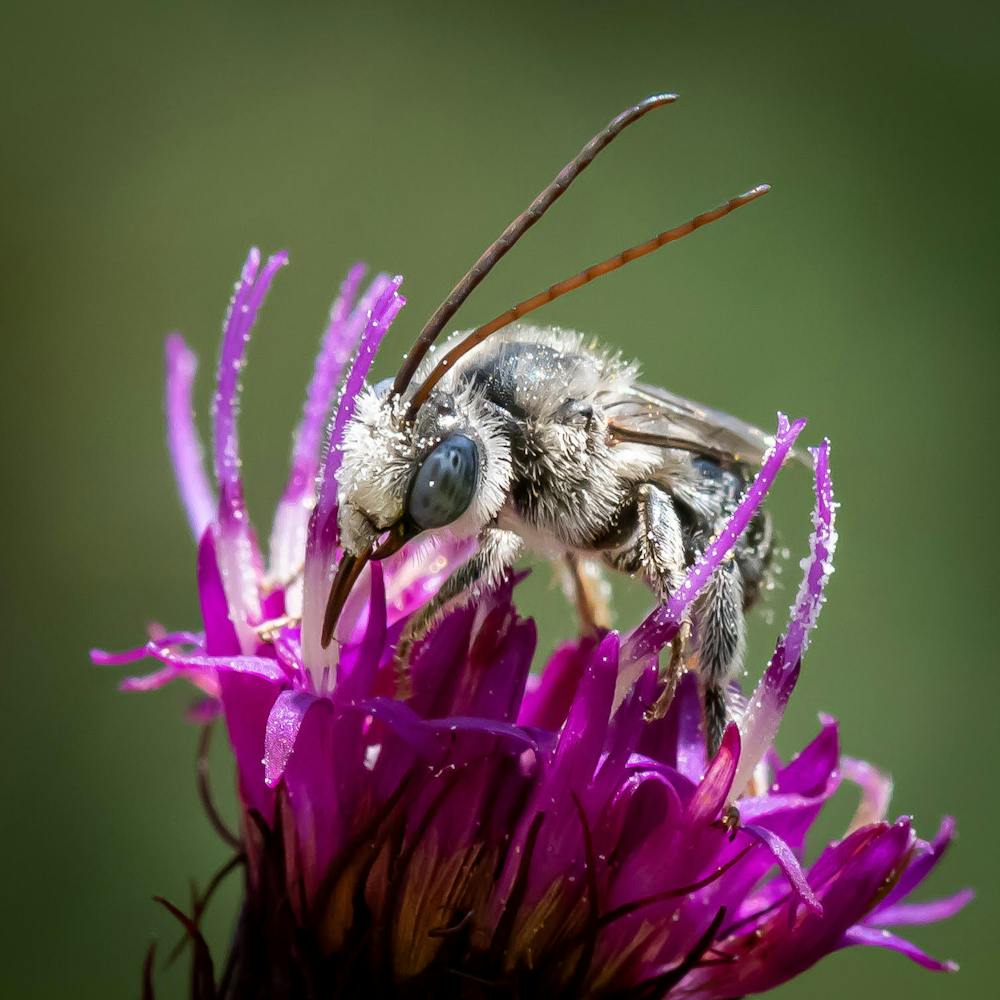
While some pollinators enjoy nectar, others get all their fat and protein from eating just the pollen itself. Flowers from the sunflower family (Asteraceae), including asters and coreopsis, offer large quantities of both pollen and nectar and also have very accessible flowers. Plants from this family are good for a range of pollinators, including many specialist bees, such as the blue-eyed, long-horned bee (Melissodes denticulatus), which feasts primarily on ironweed (Vernonia fasciculata), also a member of the sunflower family.
If you want to offer flowers that have the highest protein content to nourish the next generation of strong pollinators, consider plants from the pea family (Fabaceae), such as dwarf indigo, false indigo and bush clover. Some of the plants in this family do not even offer nectar as a reward. Instead, they provide high protein pollen that’s accessible only to the most effective pollinators. If you include plants from the pea family in your garden, you may observe fewer visitors, but they will be receiving pollen with high protein levels.
Selecting a few native perennials from each of these three families, all widely available in garden centers, is a good place to start. Just as a diversity of food is important for human health, a mixture of flower types offers pollinators a varied and healthy diet. Interestingly, the diversity of human diets is directly linked to pollinators, because most of the color and variety in human diets comes from plants pollinated by insects.
Maybe you’ve heard that insects worldwide are declining in number and variety. This issue is of particular concern for humans, who rely on insects and other animals to pollinate food crops. Pollinators are indeed facing many threats, from habitat loss to pesticide exposure.
Thankfully, gardeners can provide an incredible service to these valuable animals just by planting more flowers. As our research shows, small patches of garden can help boost pollinators – even when the surrounding landscape has few resources for them. The one constant in all our research is that insects love flowers. The more flowers and the more types of flowers, the more pollinators Earth will have.
Laura Russo, Assistant Professor of Ecology and Evolutionary Biology, University of Tennessee
This article is republished from The Conversation under a Creative Commons license. Read the original article.
by ldutton
You can probably picture a vampire: Pale, sharply fanged undead sucker of blood, deterred only by sunlight, religious paraphernalia and garlic. They’re gnarly creatures, often favorite subjects for movies or books. Luckily, they’re only imaginary … or are they?
There are real vampires in the world of bats. Out of over 1,400 currently described bat species, three are known to feed on blood exclusively.
The common vampire bat, Desmodus rotundus, is the most abundant. At home in the tropical forests of Central and South America, these bats feed on various animals, including tapirs, mountain lions, penguins and, most often nowadays, livestock.
Feeding on a blood diet is unusual for a mammal and has led to many unique adaptations that facilitate their uncommon lifestyle. Unlike other bats, vampires are mobile on the ground, toggling between two distinct gaits to circle their sleeping prey. Heat-sensing receptors on their noses help them find warm blood under their prey’s skin. Finally, the combination of a small incision, made by potentially self-sharpening fangs, and an anticoagulant in their saliva allows these bats to feed on unsuspecting prey.
To me, as a behavioral ecologist, who is interested in how pathogens affect social behaviors and vice versa, the most fascinating adaptations to a blood-feeding lifestyle are observable in vampire bats’ social lives.
Blood is not very nutritious, and vampire bats that fail to feed will starve relatively quickly. If a bat returns to the roost hungry, others may regurgitate a blood meal to get them through the night.
Such food sharing happens between bats who are related – such as mothers and their offspring – but also unrelated individuals. This observation has puzzled evolutionary biologists for quite a while. Why help someone who is not closely related to you?
It turns out that vampire bats keep track of who feeds them and reciprocate – or not, if the other bat has not been helpful in the past. In doing so, they form complex social relationships maintained by low-cost social investments, such as cleaning and maintaining the fur of another animal, called allogrooming, and higher-cost social investments, such as sharing food.
These relationships are on par with what you would see in primates, and some people compare them to human friendships. Indeed, there are some parallels.
For instance, humans will raise the stakes when forming new relationships with others. You start with social investments that don’t cost much – think sharing some of your lunch – and wait for the other person’s response. If they don’t reciprocate, the relationship may be doomed. But if the other person does reciprocate by sharing a bit of their dessert, for instance, your next investment might be larger. You gradually increase the stakes in a game of back-and-forth until the friendship eventually warrants larger social investments like going out of your way to give them a ride to work when their car breaks down.
Vampire bats do the same. When strangers are introduced, they will start with small fur-cleaning interactions to test the waters. If both partners keep reciprocating and raising the stakes, the relationship will eventually escalate to food sharing, which is a bigger commitment.
My lab studies how infections affect social behaviors and relationships. Given their vast array of social behaviors and the complexity of their social relationships, vampire bats are the ideal study system for me and my colleagues.
How does being ill affect how vampire bats behave? How do other bats behave toward one that is sick? How does sickness affect the formation and maintenance of their social relationships?
We simulate infections in bats in our lab by using molecules derived from pathogens to stimulate an immune response. We’ve repeatedly found a form of passive social distancing where sick individuals reduce their interaction with others, whether it’s allogrooming, social calling or just spending time near others.
Importantly, these behavioral changes haven’t necessarily evolved to minimize spreading disease to others. Rather, they are parts of the complex immune response that biologists call sickness behaviors. It’s comparable to someone infected with the flu staying at home simply because they don’t feel up to venturing out. Even if such passive social distancing may have not evolved to prevent transmission to others, simply being too sick to interact with others will still reduce the spread of germs.
Interestingly, sickness behaviors can be suppressed. People do this all the time. So-called presenteeism is showing up at work despite illness due to various pressures. Similarly, many people have suppressed symptoms of an infection to engage in some sort of social obligation. If you have little kids, you know that when everyone in your household is coming down with something, there’s no way you can just sit back and not take care of the little ones, even if you feel quite bad yourself.
Animals are no different. They can suppress sickness behaviors when competing needs arise, such as caring for young or defending territory. Despite their tendency to reduce social interactions with others when sick, in vampire bats, sick mothers will continue to groom their offspring and vice versa, probably because mother-daughter relationships are extra important. Mothers and daughters are often each other’s primary social relationships within groups of vampire bats.
Despite their many fascinating adaptations and complex social lives, vampire bats are not universally admired. In fact, in many areas in South and Central America, they are considered pests because they can transmit the deadly rabies virus to livestock, which can cause quite significant economic losses.
Before people introduced livestock into their habitat, vampire bats probably had a harder time finding food in the form of native prey species such as tapirs. Now, livestock has become their primary food source. After all, why not feed on something that is reliably at the same place every night and quite abundant? Increases in livestock abundance come with increases in vampire bat populations, probably perpetuating the problem of rabies transmission.
The farmers’ quarrels with vampires make sense, especially in smaller cattle herds, where losing even one cow can significantly hurt a farmer’s livelihood. Culling campaigns have used topically applied poisons called vampiricide, basically a mix of petroleum jelly and rat poison. Bats are caught, the paste is applied to the fur, and they carry it back to the roost, where others ingest the poison during social interactions. Interestingly, large-scale culling may not be very effective in reducing rabies spillover.
Now, the focus has started to shift toward large-scale cattle vaccinations or vaccinating the vampire bats themselves. Researchers are even considering transmissible vaccines: They could genetically modify herpes viruses, which are quite common in vampire bats, to carry rabies genes and vaccinate large swaths of vampire bat populations.
Whichever method is used to mitigate vampire bat-human conflicts, more empathy for these misunderstood animals could only help. After all, if you stick your head into a hollow tree full of vampire bats – assuming you can brave the smell of digested blood – remember: You’re looking at a complex network of individual friendships between animals that care deeply for each other.
Sebastian Stockmaier, Assistant Professor of Ecology and Evolutionary Biology, University of Tennessee
This article is republished from The Conversation under a Creative Commons license. Read the original article.
by ldutton
Two researchers at the University of Tennessee, Knoxville, have received prestigious National Science Foundation CAREER awards to help them establish a firm foundation for a lifetime of leadership in integrating education and research.
Stephanie Kivlin, an associate professor in the Department of Ecology and Evolutionary Biology, and Wei Wang, an assistant professor in the Department of Mechanical, Aerospace, and Biomedical Engineering, join the NSF’s Faculty Early Career Development (CAREER) Program, which supports the nation’s best early-career faculty and recognizes their promise as academic role models in research and education.
by ldutton
The Collaborative for Animal Behavior (CoLAB) is a pioneering research center dedicated to understanding the complexities of animal behavior in a rapidly changing world. This new center within the UT College of Arts and Sciences brings together scholars from diverse fields to collaborate on research programs that address critical challenges at the intersection of animal behavior, environmental change, and human influence.
by Logan Judy
Just like people confronted with a sea of options at the grocery store, bees foraging in meadows encounter many different flowers at once. They must decide which ones to visit for food, but it isn’t always a straightforward choice.
Flowers offer two types of food: nectar and pollen, which can vary in important ways. Nectar, for instance, can fluctuate in concentration, volume, refill rate and accessibility. It also contains secondary metabolites, such as caffeine and nicotine, which can be either disagreeable or appealing, depending on how much is present. Similarly, pollen contains proteins and lipids, which affect nutritional quality.
When confronted with these choices, you’d think bees would always pick the flowers with the most accessible, highest-quality nectar and pollen. But they don’t. Instead, just like human grocery shoppers, their decisions about which flowers to visit depend on their recent experience with similar flowers and what other flowers are available.
I find these behaviors fascinating. My research looks at how animals make daily choices – especially when looking for food. It turns out that bees and other pollinators make the same kinds of irrational “shopping” decisions humans make.
Humans are sometimes illogical. For instance, someone who wins $5 on a scratch ticket immediately after winning $1 on one will be thrilled – whereas that same person winning $5 on a ticket might be disappointed if they’re coming off a $10 win. Even though the outcome is the same, perception changes depending on what came before.
Perceptions are also at play when people assess product labels. For instance, a person may expect an expensive bottle of wine with a fancy French label to be better than a cheap, generic-looking one. But if there’s a mismatch between how good something is and how good someone expects it to be, they may feel disproportionately disappointed or delighted.
Humans are also very sensitive to the context of their choice. For example, people are more likely to pay a higher price for a television when a smaller, more expensive one is also available.
These irrational behaviors are so predictable, companies have devised clever ways to exploit these tendencies when pricing and packaging goods, creating commercials, stocking shelves, and designing websites and apps. Even outside of a consumer setting, these behaviors are so common that they influence how politicians design public policy and attempt to influence voting behavior.
Research shows bumblebees and humans share many of these behaviors. A 2005 study found bees evaluate the quality of nectar relative to their most recent feeding experience: Bees trained to visit a feeder with medium-quality nectar accepted it readily, whereas bees trained to visit a feeder with high-quality nectar often rejected medium-quality nectar.
My team and I wanted to explore whether floral traits such as scents, colors and patterns might serve as product labels for bees. In the lab, we trained groups of bees to associate certain artificial flower colors with high-quality “nectar” – actually a sugar solution we could manipulate.
For example, we trained one group to associate blue flowers with high-quality nectar. We then offered that group medium-quality nectar in either blue or yellow flowers.
We found the bees were more willing to accept the medium-quality nectar from yellow flowers than they were from blue. Their expectations mattered.
In another recent experiment, we gave bumblebees a choice between two equally attractive flowers – one high in sugar concentration but slower to refill and one quick to refill but containing less sugar. We measured their preference between the two, which was similar.
We then expanded the choice by including a third flower that was even lower in sugar concentration or even slower to refill. We found that the presence of the new low-reward flower made the intermediate one appear relatively better.
These results are intriguing and suggest, for both bees and other animals, available choices may guide foraging decisions.
Understanding these behaviors in bumblebees and other pollinators may have important consequences for people. Honeybees and bumblebees are used commercially to support billions of dollars of crop production annually.
If bees visit certain flowers more in the presence of other flowers, farmers could use this tendency strategically. Just as stores stock shelves to present unattractive options alongside attractive ones, farmers could plant certain flower species in or near crop plants to increase visitation to the target crops.
Claire Therese Hemingway, Assistant Professor of Ecology & Evolutionary Biology, University of Tennessee
This article is republished from The Conversation under a Creative Commons license. Read the original article.